
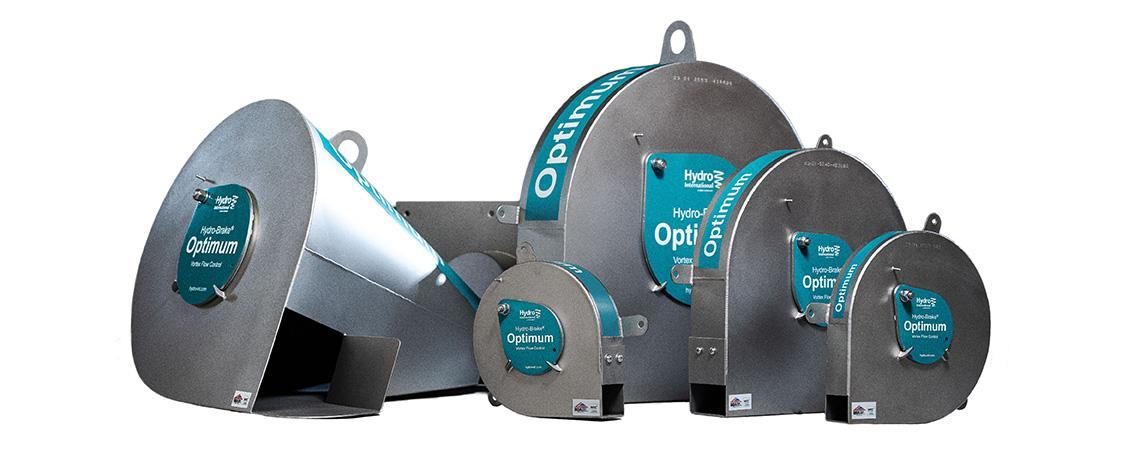
Flow Smarter Conversations: Your Hydro-Brake Optimum Questions Answered
In this blog, Craig Murray (Water Solutions Consultant) and Shajieuddin Khan (Applications Engineer) answer 12 common questions about Hydro-Brake® Optimum, exploring how optimised flow control can help reduce storage requirements, lower construction costs and improve overall drainage system performance.

What exactly is a vortex flow control?
Craig: A vortex flow control regulates discharge using hydraulics rather than mechanical components. As water enters the device, flow is directed to form a vortex, which throttles flow to the required discharge rate. The key advantage is that this is achieved without moving parts or external power requirements, helping engineers meet permitted discharge rates whilst optimising overall drainage system performance.
Why is flow control so important in drainage design?
Shajie: The flow control is one of the most influential components in any detention system because its hydraulic performance directly impacts how much storage is required upstream. By optimising flow rates throughout its performance, Hydro-Brake® Optimum flow control can help reduce storage volumes, reducing excavation requirements and construction costs while still achieving compliant discharge rates.
Why are more engineers looking beyond traditional orifice plates?
Shajie: Orifice plates achieve flow restriction by reducing the size of the opening. As discharge requirements become tighter, the opening gets smaller, which can increase blockage risk. Vortex flow controls can achieve the same discharge rate while maintaining significantly larger openings, helping reduce blockage risk without compromising hydraulic performance.
How does Hydro-Brake® Optimum help optimise storage requirements?
Craig: Hydro-Brake® Optimum has been developed to maximise hydraulic efficiency. By allowing more water to pass during the earlier stages of a storm event, less water needs to be stored upstream. Depending on the site, this can reduce storage requirements by up to 30% compared with an orifice plate. This presents the opportunity to reduce the footprint of detention systems and lower overall project costs.

Why does reducing storage matter?
Shajie: Smaller storage requirements can translate directly into project savings. Less storage means reduced excavation, less concrete, smaller structures and lower construction costs. When a flow control is used to optimise storage, consultants, contractors and developers can realise significant efficiencies from feasibility to construction.
What are Hydro-Brake® Optimum's design objectives?
Shajie: One of the unique aspects of Hydro-Brake® Optimum is that it can be configured around specific project priorities. Whether the objective is to minimise storage, minimise blockage risk, future-proof the system, fit an existing pipe size or fit a specific chamber size, the device can be tailored to suit the application's needs.
What does "future-proofing" mean in practice?
Craig: Surface water Hydro-Brake® Optimum units can be supplied with an adjustable inlet that allows flow settings to be adjusted, post-install, as site requirements change. This can accommodate urban creep, future development or changing drainage requirements without replacing the flow control, giving asset owners a reliable asset, well into the future.
How does Hydro-Brake® Optimum help reduce maintenance requirements?
Craig: The device is manufactured from robust, stainless steel and has no moving parts or power requirements. Combined with a larger outlet, this helps minimise blockage risk compared to than traditional flow controls, reduces maintenance intervals and delivers reliable long-term performance.
How do Hydro and Civilmart work together?
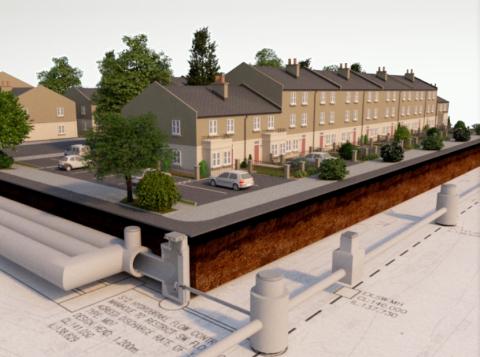
Craig: Civilmart provides high-quality, pre-cast, concrete stormwater storage solutions and Hydro provides market-leading vortex flow control technology. By combining storage with a flow control from the outset, designers can offer added value to contractors and developers by optimising drainage layouts, reducing construction costs and delivering efficient, compliant stormwater assets.
How can engineers assess whether Hydro-Brake® Optimum is right for their project?
Shajie: We've made that process straightforward through Hydro's free Online Design Tool. Users can compare flow control options, explore varying design objectives, generate performance curves and request technical support. It's a practical way to evaluate how Hydro-Brake® Optimum could benefit a project before construction even begins. Engineers can also book a complimentary Lunch & Learn session with our team to explore project-specific applications.
What makes Hydro-Brake® Optimum different from other vortex flow controls?
Shajie: Hydro-Brake® Optimum was specifically developed to give engineers greater flexibility in designing stormwater layouts for new development. Rather than offering a single design approach, Hydro-Brake® Optimum offers flexibility around specific objectives, including minimising storage requirements, reducing blockage risk, future-proofing the system, fitting existing pipework or accommodating chamber constraints. This flexibility allows designers to optimise flow control based on project priorities.
Hydro has been manufacturing flow controls for over 40 years. Why is that experience important?
Craig: Every drainage project is different, and that's where experience matters. Hydro has been helping engineers optimise flow control solutions since the early 1980s, with thousands of installations worldwide. That experience has shaped the development of Hydro-Brake® Optimum and continues to inform how we support our customers today. For us, "Flow Smarter" isn't just a campaign message. It's the product of more than 40 years of vortex flow control expertise.